7 Best Ayahuasca Retreat Centers in Peru for 2026

Researched by: James Smith
Updated: July 2026
This is a manually curated list about the Best Ayahuasca Retreat Centers in Peru, managed by James Smith.
We want our lists to be useful and accurate. If you have an established business that deserves to be listed here, please use this form to let James Smith know.
The short answer: Etnikas is the clearest option for published medical support in the Sacred Valley; Temple of the Way of Light publishes the most detailed Amazon risk-management information; Naturalia has the smallest stated group size; Caya Shobo publishes specific staffing and emergency arrangements; Hummingbird has a live 2026 calendar and small groups; Arkana operates in both the Amazon and Sacred Valley; and Selva Madre publishes unusually clear terms about screening, boundaries and evacuation. These are directory comparisons, not safety guarantees or treatment recommendations.
Ayahuasca is a psychoactive brew, not an approved treatment on this page. The UK Foreign, Commonwealth & Development Office says brews offered to tourists in Peru are unregulated, people have become seriously ill or died, remote settings can delay medical care, and sexual assaults have been reported. A review of ayahuasca and travellers found mixed evidence of benefit alongside potential harms and interactions.
Do not book on the strength of testimonials or the word “safe.” Ayahuasca can interact with medicines and may be unsuitable with some cardiovascular, neurological or psychiatric histories, during pregnancy or breastfeeding, or when emergency care is hard to reach. A systematic review of psychosis reports recommends that people with a personal or family history of psychosis or mania avoid hallucinogens. Disclose every medicine, supplement, substance and relevant condition to the operator and an independent qualified clinician; never stop prescribed medication to attend a retreat without the prescriber’s guidance.

Best for published on-site medical arrangements in the Sacred Valley. Etnikas currently advertises three-, five- and seven-day programmes near Cusco. Its safety material says applicants complete physical and psychological screening, medication cases are reviewed, and a doctor with emergency equipment is present during ceremonies.
Those are operator-published arrangements, not an independent certification or a guarantee of safety. Ask who is physically present for your dates, which clinic receives emergencies, how transport works, what the brew contains and what happens if screening excludes you. A mandatory health letter or local check-up may apply.
Best for detailed risk-management information in the Amazon. Temple of the Way of Light publishes current 2026 retreat dates, medical and psychological screening, sober ceremony support, first-aid-trained staff, 24-hour site support, security, communications and an evacuation relationship with an Iquitos clinic.
The center is still in a remote rainforest setting and its programmes are not medical treatment. Screening and staffing reduce some risks but cannot eliminate adverse reactions, delayed evacuation or safeguarding concerns. Confirm the exact format, group and support team for your date, plus cancellation terms if the application is declined.
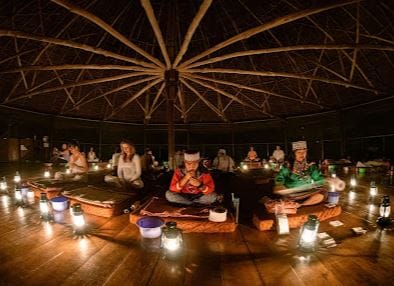
Best for a very small stated group size. Naturalia near Iquitos currently offers seven-day ayahuasca-and-yoga stays and longer formats, with online application and booking routes. It limits groups to five, describes medical screening and preparation guidance, and provides private bungalow accommodation.
Naturalia explicitly says it does not promise transformation, which is a useful boundary, but it remains a remote jungle programme. Ask about sober staffing throughout ceremonies, emergency transport time, staff qualifications, the precise substances used, and whether any activity or plant preparation is optional.
Retreats Available at Naturalia Retreat Center
Caya Shobo
Comunidad Varillal, 14km Iquitos-Nauta Hwy, Loreto, Peru
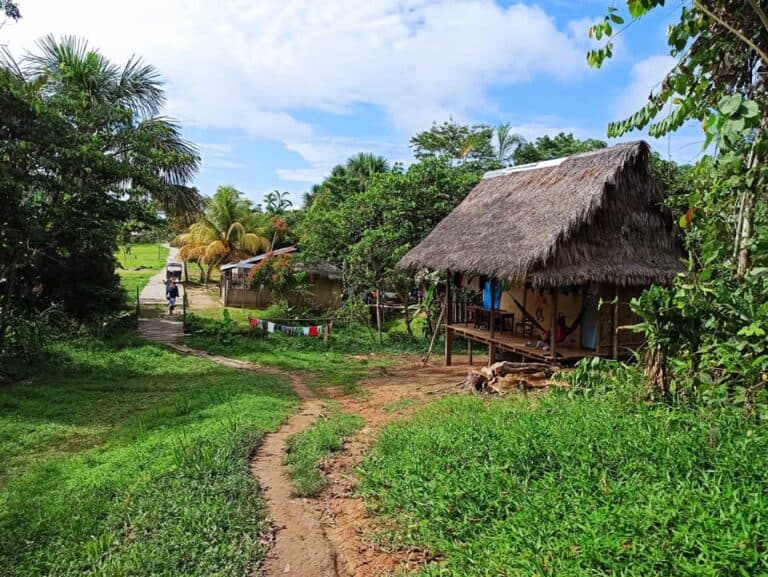
Best for published staffing ratios and facility safeguards. Caya Shobo near Iquitos advertises traditional Shipibo retreats and describes pre-arrival medication and health screening, a maximum of 12 guests, one shaman per four guests, two or three facilitators, first-response supplies, security and emergency contact with clinics in Iquitos.
The programme may include master-plant dieta work beyond ayahuasca, and its healing language reflects the operator’s tradition rather than a verified clinical outcome. Confirm every ingested or topical preparation, the qualifications of therapeutic support, evacuation time and what is excluded by screening before paying.
Hummingbird Healing Center
Monitor Huascar #226 Iquitos, Peru
Best for a visible 2026 calendar and small-group formats. Hummingbird Healing Center near Iquitos lists current seven-, nine- and 12-day dates, a maximum of ten guests, multi-stage screening and sober support staff during and after ceremonies. Longer immersion formats are also advertised.
Its standard programmes include Huachuma/San Pedro, and its site markets work around depression, anxiety and PTSD. BrowseWellness does not validate those treatment implications or claims about incident history. Ask whether additional substances can be declined, who assesses psychiatric suitability, and what emergency and post-retreat support actually applies.
Arkana Spiritual Center
152 JIRÓN FITZCARRALD, IQUITOS, LORETO, 16002, PERU
Best for a choice between Amazon and Sacred Valley settings. Arkana currently advertises seven- to 21-day Peru programmes near Iquitos and Cusco. It describes pre-arrival screening, medical oversight, facilitators, integration sessions and different accommodation levels at its two locations.
Arkana also advertises optional additional substances, including Bufo at the Amazon location and San Pedro in the Sacred Valley. Combining or sequencing psychoactive substances changes the risk profile. Confirm the exact programme, brew and optional activities in writing, and treat all outcome, safety-record and medical-oversight claims as operator supplied.
Selva Madre Healing Center
Caserio Padrecocha Rio nanay, 16000 Peru
Best for transparent participation and conduct terms. Selva Madre near Iquitos currently publishes several retreat lengths and an online reservation route. Its terms require a medical questionnaire and full disclosure, prohibit harassment and intoxication, describe screening-related rejection and explain that staff accompany a guest to a medical facility if evacuation is required.
The same terms state that Selva Madre is not a medical facility, its staff do not provide healthcare and emergency expenses fall to the participant. Read the deposit and early-departure rules closely, verify transport time to suitable care, and ask who remains sober and responsible during each ceremony.

Conclusion
We retained these seven centers because, on 12 July 2026, each had a current Peru programme or booking route plus enough published information to compare screening, group size, staffing or emergency planning. We removed 17 entries whose represented programme had changed, whose identity or current operation could not be verified well enough, or whose compound-substance and treatment claims did not meet the threshold for this shortlist. Inclusion is not an endorsement and operator claims have not been independently audited.
Before applying, ask for the complete ingredient list, screening criteria, facilitator and medical qualifications, sober staff ratio, consent and touch policy, complaint route, sleeping and bathroom arrangements, communications, nearest appropriate clinic, evacuation time, insurance requirements and refund terms. Share the itinerary with someone at home and keep independent transport and emergency contacts. Do not use a retreat instead of medical or mental-health care, and do not stop prescribed medication without the prescriber’s guidance.
FAQs About Ayahuasca Retreat Centers in Peru
Are ayahuasca retreats in Peru safe?
No retreat can guarantee safety. Ayahuasca is psychoactive, brews offered to tourists are unregulated, and serious illness, deaths and assaults have been reported. Risk depends on the participant, medicines and substances, brew contents, screening, staff, setting and access to emergency care. Treat an operator’s safety claims as information to investigate, not proof.
Can I stop medication before an ayahuasca retreat?
Do not stop prescribed medicine on a retreat’s instruction alone. Disclose all prescriptions, over-the-counter medicines, supplements and substances to the operator and the clinician who prescribes or manages your care. Some medicines can interact dangerously, while abrupt withdrawal can also cause harm. If independent clinical advice says attendance is unsuitable, do not attend.
Who should avoid ayahuasca?
Suitability requires individual clinical assessment. A systematic review recommends that people with a personal or family history of psychosis or mania avoid hallucinogens. Cardiovascular or neurological conditions, pregnancy or breastfeeding, medicines and other substance use may also create risk. This list cannot determine whether ayahuasca is appropriate for you.
What safety questions should I ask a retreat?
Ask who performs medical and psychological screening, who stays sober during ceremonies, staff-to-guest ratios, training and first-aid credentials, every brew ingredient, rules on additional substances, monitoring after ceremonies, nearest clinic, evacuation time, communications, insurance and the refund policy if screening excludes you. Get important answers in writing.
How can I assess consent and safeguarding?
Request the written consent, touch, sexual-conduct and complaint policies. Ask whether guests are ever left alone while impaired, whether private one-to-one sessions occur, how bedrooms and bathrooms are secured, whether gender-matched support is available and how misconduct is reported outside the organization. Avoid any provider that dismisses these questions.
How should I plan for an emergency in remote Peru?
Check current government travel advice, obtain insurance that explicitly covers the planned activity and evacuation, identify the receiving clinic and realistic journey time, and keep independent funds, communications and transport details. Give a trusted person your itinerary and check-in plan. Never assume that a remote center has hospital-level care because it mentions medical support.