
Transcendental Meditation, usually called TM, is a taught meditation method associated with Maharishi Mahesh Yogi. It uses a sound provided by a teacher and is normally practiced sitting comfortably with the eyes closed. Its history, teaching system and health research are all worth looking at when deciding whether to learn it.
Research on TM covers blood pressure, sleep, stress and cognition, and some studies of meditation cover other methods. The evidence is more specific than a general promise of better well-being.
Workplace examples and celebrity accounts show how TM became publicly visible. They also need different kinds of evidence: an organization offering a program, a person describing an experience and a controlled trial are three separate things.
The Origins of Transcendental Meditation
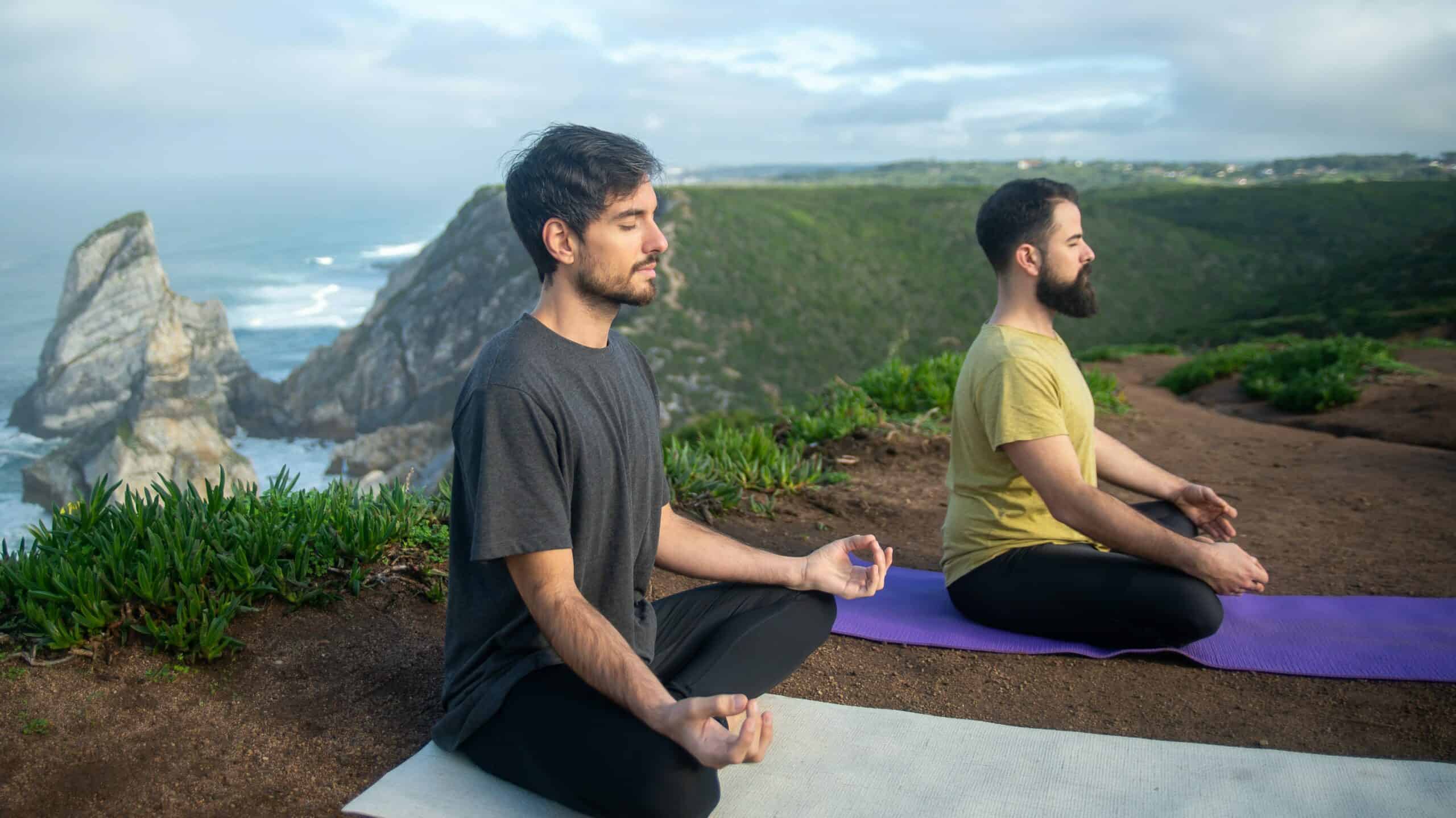
Maharishi Mahesh Yogi began teaching the method that became known as Transcendental Meditation in the 1950s. His movement connected a modern teaching organization with his account of a Vedic lineage. TM subsequently spread through teachers, schools and public supporters in several countries.
Early teachings of Maharishi Mahesh Yogi
Maharishi studied with Swami Brahmananda Saraswati, whom he called Guru Dev. The Maharishi Institute of Management dates the inauguration of the Spiritual Regeneration Movement in Madras to the end of 1957. Its account describes Maharishi's aim of making his teaching available to people of different backgrounds and beliefs.
Maharishi placed his teaching within a Vedic tradition from India. He described inner peace and higher states of consciousness as aims of practice. These are part of his teaching framework. Modern clinical studies address narrower questions, such as changes on a symptom scale or blood-pressure measurement.
Expansion and Growth of Transcendental Meditation
- The Beatles: The Beatles' association with Maharishi included a retreat in Wales in 1967 and a stay in Rishikesh, India, in 1968. Their own published timeline records both. The India visit also coincided with writing many songs for the White Album.
- Education: Maharishi School in Fairfield, Iowa, includes TM within its educational approach. It is one school associated with the movement. Meditation is not part of every school curriculum.
- Research: TM has been studied in clinical and nonclinical settings. The organization presents its own account of health research. For an assessment of a particular claim, look at the original study and independent reviews as well as the teaching organization's summary.
- Public supporters: David Lynch, Oprah Winfrey and Paul McCartney have spoken publicly about TM. Their accounts are part of its cultural history and are personal experiences, not outcomes everyone should expect.
The movement developed an international network of teachers and organizations. Its current teaching model includes personal instruction and follow-up support. Someone interested in learning can ask a local teacher what the course includes, how the sessions work and what support is available afterwards.
TM's organizational history also explains why its teachers distinguish their method from generic mantra exercises. Maharishi established a particular teaching system, and the organization still presents certification and individual instruction as part of learning it.
Learning the Technique from Certified Teachers
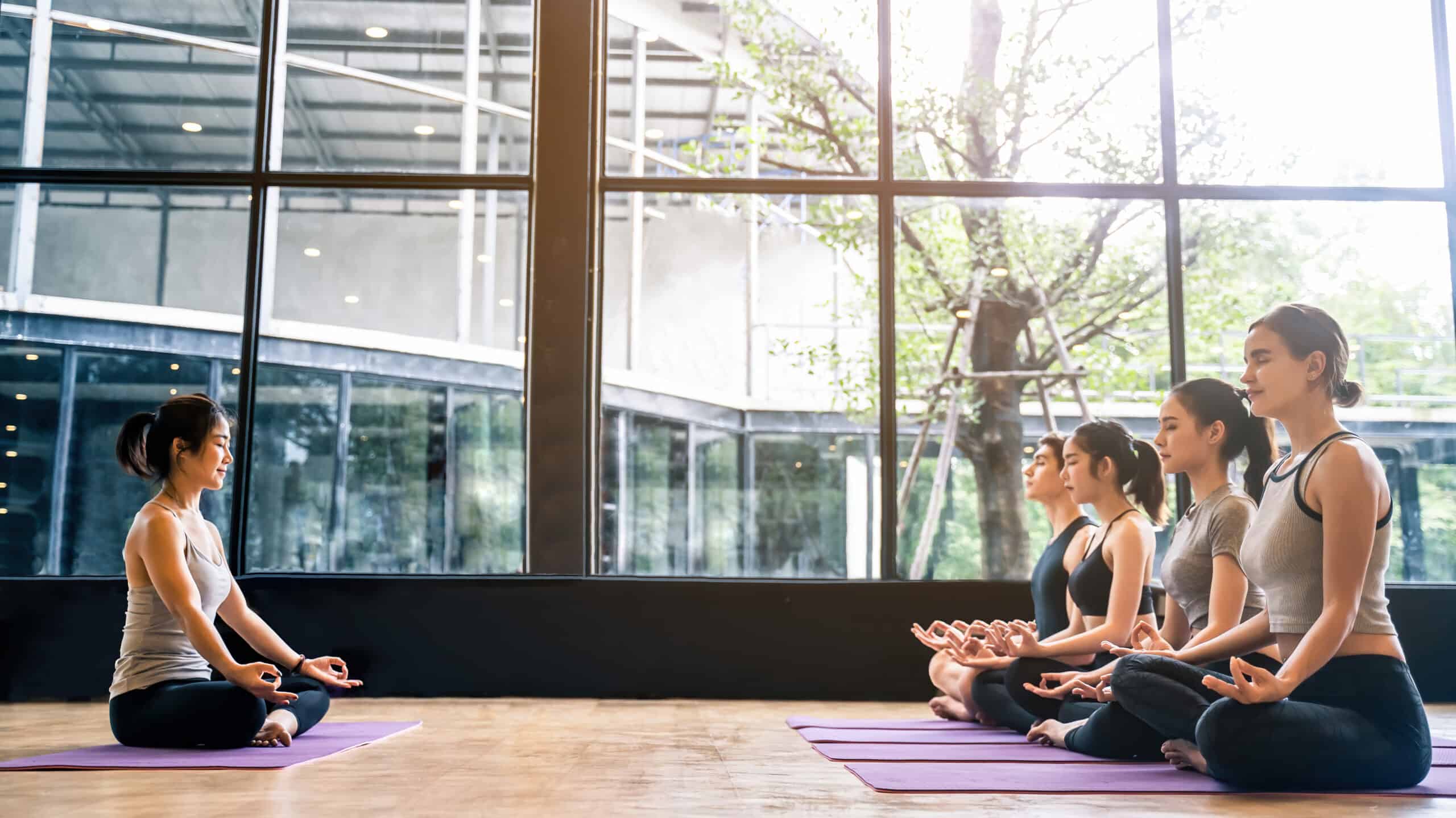
The TM organization teaches through instructors it certifies. If you want to learn that specific method, its official directory is the place to check a teacher's affiliation. You can also ask about their experience, course arrangements and how they respond when a learner has questions or difficulties.
Importance of Certified Instructors
TM certification identifies a teacher within the organization's training system. The official course begins with individual instruction and continues with sessions to explain and review practice. This allows learners to ask about their own experience. Certification is not a medical qualification, and clinical concerns still need appropriate healthcare advice.
- Individual instruction: The first teaching session is one-to-one, so you can ask questions about the method and your experience of learning it.
- Teaching affiliation: Certification helps you check that an instructor belongs to the TM organization's teaching system.
- Follow-up: The organization offers continued opportunities to review practice and ask questions. Confirm the arrangements available through the center where you learn.
Finding a Qualified Teacher
To find a qualified Transcendental Meditation teacher near you, follow these steps:
- Check the official directory: Start at tm.org and use its teacher or center finder. The site also explains the course format and introductory sessions.
- Attend an introduction: The organization offers free introductory talks, including online options. These are a chance to hear its description of the method and ask about the full course before enrolling.
- Ask for recommendations: Reach out to friends, family members, or colleagues who practice Transcendental Meditation and inquire about their experiences with instructors. Personal referrals can be a valuable resource when searching for a qualified teacher.
Before enrolling, ask what the fee covers, how the teaching sessions are scheduled and what happens if you need further help. You can also ask whether there are adjustments relevant to your circumstances. A clear explanation of the course is more useful than a general promise about its potential.
The outline below describes publicly available information about TM and is an overview, not a complete lesson. Detailed instruction comes through the course and the teacher, including how to use the sound and respond to questions about practice.
Practicing Transcendental Meditation: The Technique Explained

TM's organization describes it as an effortless practice, normally lasting twenty minutes twice a day. The person sits comfortably with eyes closed and uses the sound taught by their instructor. The organization calls the settling of awareness "transcending"; that is its own explanation of the experience.
Preparing for meditation sessions
Choose a place where you can sit comfortably for the session. A chair is an option; no special sitting posture is required in the organization's public description. Clothing and support should allow you to sit without strain. Your teacher can explain the routine and help with practical questions about where and when to practice.
Learning to use the mantra
The mantra is a sound provided personally by a TM teacher. The public description distinguishes it from an affirmation whose meaning you contemplate, and from an object on which you concentrate. Ask your teacher how it is used in this method. The course provides an opportunity to learn the instructions and review them with a teacher.
- Sit comfortably: Begin by finding a comfortable seated position with proper posture and relaxed muscles.
- Close your eyes: Gently close your eyes, allowing them to rest naturally without strain or tension.
- Use the sound as taught: Follow your teacher's instructions for using the mantra silently. The public overview is not a substitute for that instruction.
- Keep the practice easy: TM is described as involving neither concentration nor thought control. Bring questions about thoughts or effort to your teacher.
- End the session: Follow the finishing instructions given in the course, including returning to normal activity comfortably. The usual adult session is described as twenty minutes.
The usual adult routine is two sessions each day. Ask the teacher how to fit them around your schedule and how the follow-up process works. An introductory talk can explain the time commitment and course format before you decide whether it suits you.
Learning the instructions tells you how the course is taught, not what it does for your health. Research can then help assess a specific outcome, taking account of the participants, comparison group and length of follow-up.
Health Benefits Associated with Regular Practice

TM research includes trials and observational studies, which answer different questions. A trial comparing TM with another activity can provide stronger evidence about an effect than a testimonial or a simple before-and-after report. Findings should still be read for the particular outcome and group studied.
Blood pressure evidence
The American Heart Association's 2017 scientific statement discusses possible blood-pressure benefits of TM while noting limitations in the evidence. It treats meditation as a possible addition to established risk-reduction care. A separate review of meditation programs considers psychological outcomes.
Sleep evidence
In a 2022 randomized trial of 80 healthcare workers, participants assigned to TM reported a greater reduction in insomnia symptoms at three months than controls receiving usual resources, though the difference sat at the edge of statistical significance (P = .05). Insomnia was a secondary outcome. The study's primary measure of psychological distress did not improve significantly more with TM. This is useful but limited evidence about one group, not a general treatment recommendation for insomnia.
Pain research
A small TM brain-imaging study examined responses to experimentally applied heat outside meditation sessions. It reported changes in brain activation after participants learned the technique. It does not show that TM relieves a chronic pain condition.
Cognition, stress and creativity research
- Cognition: A 2012 meta-analysis combined studies of several meditation approaches. It reported average effects that differed across outcomes and methods, with smaller effects on cognitive measures than on some emotional measures. The review also identified substantial methodological problems in the wider literature.
- Stress: A small randomized trial of school staff reported less perceived stress, depression and burnout after four months of TM compared with a waiting-list group. All outcomes were self-reported.
- Creativity: Research in Taiwanese secondary-school students included a drawing-based creative-thinking test and other cognitive measures. The researchers reported positive results after months of TM. This is evidence about particular tests and students. It does not guarantee more original ideas for every adult who practices.
These findings answer different questions, so do not expect them as a single package of benefits. Someone considering TM for blood pressure, sleep or another health concern should discuss its place in their care with a healthcare professional. Continued treatment and follow-up remain separate from learning a meditation method.
Mental well-being and emotional responses
TM studies have examined outcomes such as anxiety, depressive symptoms and emotional exhaustion. Results vary with the study and comparison group. Personal experiences may include feeling more settled, but clinical symptom scores, self-awareness and the quality of relationships are different outcomes, each measured on its own.
Research on cognitive function
TM's own instructions distinguish it from focused-attention practice. Studies in Taiwanese school students reported improvements on some cognitive tests after six to twelve months. A later systematic review of randomized TM trials found mixed results and concerns about study quality. These findings do not clearly show that practitioners have better brain function.
Emotional intelligence and self-reflection
TM is not taught as a self-reflection exercise during the session. Questions about emotions and relationships can instead be considered in daily life: what you notice, how you respond and what another person tells you about their experience. Claims that a meditation method improves emotional intelligence need measures of those abilities, beyond reports of relaxation.
- Understanding emotions: Notice how you identify your own feelings and ask what someone else is feeling instead of assuming. This is a practical reflection, not a guaranteed result of learning TM.
- Decision-making: Consider how you respond when a decision feels pressured. Feeling calm does not mean you made a good decision, and completing a meditation session guarantees neither.
- Responses to stress: Some trials report reduced anxiety or distress, but people may still need support for difficult emotions. Meditation does not protect against depression, and it is not a reason to delay seeking care.
If you are learning TM, use follow-up sessions to discuss the practice itself and any difficulties. For a mental-health concern, ask a qualified clinician about suitable care. A TM teacher does not assess or treat a condition.
Workplace programs raise another set of questions. A course may be offered as an employee benefit, studied as an intervention, or promoted through a leader's experience. The evidence for those situations is not interchangeable.
Transcendental Meditation in the Workplace
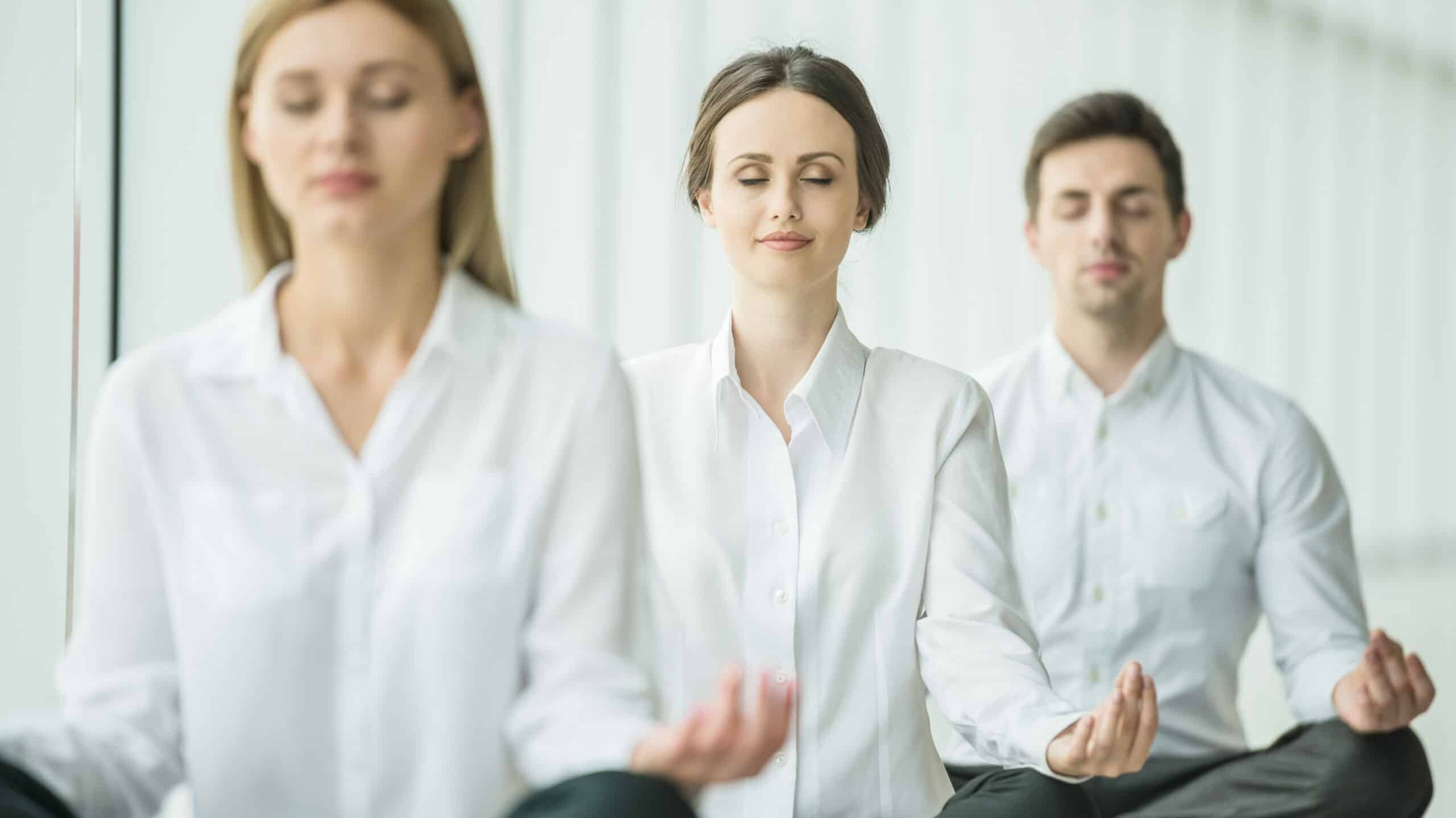
TM has been offered and studied in work settings. When comparing workplace wellness programs, check which method is being taught and what outcomes are measured. A mindfulness course, a yoga program and TM have different instructions, even when each is discussed as a response to stress.
What workplace studies measure
- Stress: The school-staff TM trial assessed reported stress and burnout. A broader review of meditation and yoga discusses possible mechanisms across several practices. A mechanism proposed in a review is not an outcome measured in a trial.
- Focus: Attention tests can assess a particular cognitive task. Workplace efficiency and decision quality need their own measures, so a positive meditation study does not mean higher employee productivity.
- Creativity: A creative-thinking test and a person's account of finding ideas describe different experiences. The school-student research discussed above assessed test performance. Whether those findings apply to the tasks adults do at work requires separate evidence.
- Teamwork: Communication and empathy are relevant questions for a workplace program. Look for evidence that measures these outcomes directly, and ask participants about their experience. Do not assume meditation improves every team.
Workplace examples and their different methods
These examples are often mentioned in discussions of meditation at work. They involve different practices and different forms of evidence.
- Google: Search Inside Yourself began at Google in 2007 and later became an independent teaching program. Its approach includes mindfulness meditation, emotional intelligence and leadership. It is a mindfulness-based program, not TM instruction.
- Aetna: An Aetna-associated randomized pilot tested mindfulness and therapeutic yoga programs for employees. It reported improvements in some stress and health measures compared with controls. The study described an early test of feasibility and potential benefit, not proof that TM lowered healthcare costs.
- Bridgewater Associates: Founder Ray Dalio has written about his personal TM practice and the value he places on it. His account links meditation with the way he approaches decisions and work. It is a first-person view from a business leader, not controlled evidence of company-wide outcomes.
An employer considering a program can ask what instruction it provides, how employees can raise concerns and how any results will be assessed. A named company or prominent supporter can make an approach familiar, but choosing a program still requires attention to its actual content and evidence.
TM's public profile also owes much to people in film, music and television who have discussed it. Their stories help explain its cultural visibility, while the research remains the place to evaluate health claims.
Celebrity Endorsements & Pop Culture Influence

Public figures have spoken about TM in interviews, books and foundation events. These accounts describe how individuals understand their practice. They are useful as personal testimony and cultural history, with a different role from research comparing groups of participants.
Famous Practitioners Sharing Personal Experiences
Several well-known supporters have discussed meditation in their own words. The examples below identify their public involvement or reported experience, without treating professional success as evidence that TM caused it.
- The filmmaker David Lynch founded the David Lynch Foundation in 2005 to support access to TM instruction. His recorded interviews describe the place of meditation in his creative life.
- Oprah Winfrey has publicly described her experience of Transcendental Meditation. The David Lynch Foundation's press archive includes her account as a supporter of the practice.
- Paul McCartney said in a 2015 interview on his own website that he continued to use TM when his schedule allowed and found it calming. He also recalled learning from Maharishi.
- Hugh Jackman has discussed TM in the David Lynch Foundation's interview series and co-hosted its Meditate America event in 2024. Those records show his public involvement. A personal account is not a guaranteed benefit.
Impact on Popular Culture Awareness
Celebrity interviews and fundraising events provide public settings in which TM is discussed. They can introduce people to its teaching organizations and supporters. An appealing personal story is not evidence about a health condition or the suitability of a teacher.
Jerry Seinfeld, Ellen DeGeneres and Russell Brand appear among the David Lynch Foundation's documented public supporters. In 2012, Katy Perry asked for birthday donations to the foundation and described her own meditation experience. These records document public advocacy and fundraising for TM teaching.
Frequently Asked Questions
What benefits of TM have been studied?
Studies have examined blood pressure, stress, sleep, cognition and other outcomes, with varying results and limitations. The systematic review linked here covers several meditation programs and found stronger evidence for some mindfulness outcomes than for mantra-based programs. That does not mean every advertised TM benefit is proven.
Is Transcendental Meditation scientifically proven?
TM has been studied scientifically, but a study count does not determine whether a particular claim is well supported. An independent review of cognitive outcomes, for example, found mixed results and methodological concerns. Consider the quality, comparison group and outcome of the evidence instead of treating "scientifically proven" as a single status for the whole practice.
How does TM differ from other meditation methods?
The organization describes TM as effortless, using an individually taught sound without concentration or contemplation. Other methods give different instructions and have different aims. Its research and benefits pages explain its claims, but the evidence does not show that one method is best for everyone.
Conclusion
TM combines a particular teaching method with a history of public advocacy and research. If you are interested, review the course format, ask about instruction and follow-up, and assess health claims individually. The most useful evidence explains who was studied, what changed and how the result compared with another approach.
Explore Related Retreats & Guides
Ready to go on retreat? Browse meditation retreats worldwide, including the best meditation retreat centers in Bali.