9 Best Yoga Teacher Training Courses in Thailand for 2026

Researched by: James Smith
Updated: July 2026
This is a manually curated list about the Best Yoga Teacher Training Courses in Thailand, managed by James Smith.
We want our lists to be useful and accurate. If you have an established business that deserves to be listed here, please use this form to let James Smith know.
The short answer: One Yoga is the strongest all-round 200-hour foundation; Ananda is suited to a smaller Koh Phangan cohort; The Sanctuary offers a modular format; and Suan Sati provides a residential multi-style course near Chiang Mai. Kata Hot Yoga is the specialist choice for experienced students pursuing 26+2 hot-yoga training.
This guide compares current training at the represented Thai properties, not schools by reputation alone. Use the descriptions to compare course level, style, location, residential format, prerequisites and limitations. For the wider destination context, see our guides to yoga on Koh Phangan, yoga in Phuket and yoga retreats near Chiang Mai.
Course dates, teachers, accreditation and inclusions change. Before paying, request the current curriculum, contact hours, assessment, room, meals, total fees and cancellation terms in writing. A certificate does not itself guarantee a job, work permission or professional recognition in every jurisdiction.

One Yoga
14/11 Moo 8 Koh Phangan Shritanu, Surat Thani 84280, Thailand
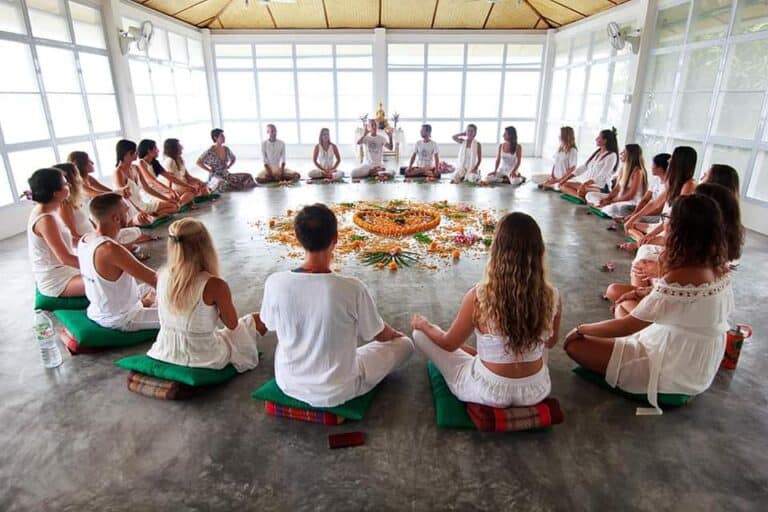
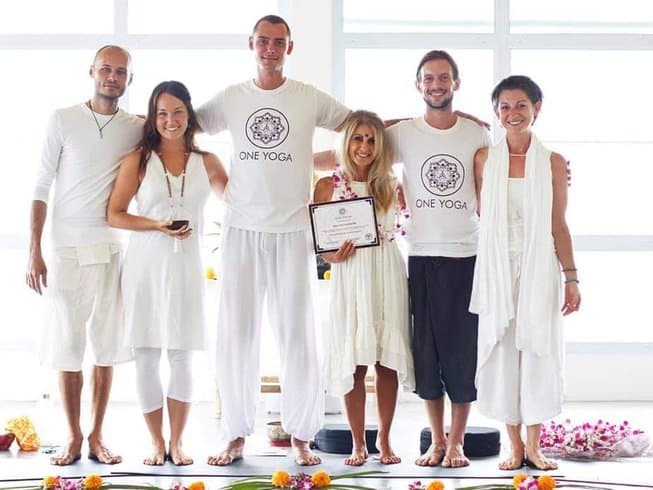
Best all-round 200-hour foundation. One Yoga runs a residential 200-hour course on Koh Phangan covering Hatha, Vinyasa, philosophy, anatomy, meditation and teaching practice. Its established training calendar and optional post-course practicum make it a strong fit for students who want both a structured curriculum and an island practice community.
Confirm the intake dates, total contact hours, lead teachers, room and meal inclusions before paying. The schedule is intensive, and completing a registered course does not guarantee employment or recognition in every country.
Retreats Available at One Yoga
Ananda Yoga & Detox Center
16/3 Moo 6, Ko Pha-ngan Sub-district, Ko Pha-ngan District, Surat Thani, Thailand
Best for a smaller Koh Phangan cohort. Ananda publishes a residential 200-hour Ashtanga-based Vinyasa training with a stated maximum of 15 students, accommodation and meals. The curriculum also includes restorative and Yin approaches, anatomy, philosophy and supervised teaching practice.
The centre also markets detox programmes, but those are not necessary evidence of training quality or health benefit. Compare the live dates, room category, refund terms and exact teaching team, and check whether its mixed-style curriculum matches the tradition you want to teach.
Retreats Available at Ananda Yoga & Detox Center
The Sanctuary Thailand
153/14 Moo 6 Ban Tai, Ko Pha-ngan District, Surat Thani 84280, Thailand
Best modular training in a secluded setting. The Sanctuary at Haad Tien publishes a 2026 200-hour programme that can be taken as two separate 100-hour modules. It blends Hatha, Vinyasa, Yin and Iyengar-informed practice with movement, breath and teaching study at its road-free Koh Phangan property.
The modular format offers flexibility, but the location is normally reached by boat or footpath and access can depend on conditions. Verify module recognition, accommodation, meals, transfers and the current faculty rather than assuming every Sanctuary workshop forms part of the qualification.
Retreats Available at The Sanctuary Thailand
Maewin Resort
Maewin Guesthouse and Resort, Mae Win Sub-District, Mae Wang District, Chiangmai, Thailand 50360
Best budget-conscious host venue near Chiang Mai. Maewin Guesthouse and Resort hosts current Yoga Vidya Mandiram teacher-training packages at the exact Mae Wang property, with accommodation and meals bundled into marketplace programmes. It suits students who prioritise a rural residential setting and traditional Hatha/Ashtanga-Vinyasa study.
Maewin is the host property rather than the training school. Confirm the organiser, certificate, current dates, curriculum, instructor team and cancellation policy on the exact programme page; do not rely on the accommodation listing alone.
Retreats Available at Maewin Resort
Mala Dhara Yoga Retreat Center
Mala Dhara, 152 Huay Bon Rd, Mu 3, T. Mae Pong, A. Doi Saket, Chiang Mai 50220
Best Chiang Mai host for visiting schools. Mala Dhara’s current event calendar lists 200-hour teacher trainings at its rice-field retreat centre, including residential formats with tuition, accommodation and meals. The setting works well for students who want an eco-resort base outside the city.
Different schools and teachers rent the venue, so curriculum, prerequisites, certification and price are programme-specific. Check the exact 2026 event and organiser; an older event page does not confirm a future intake.
La Casa Shambala
La Casa Shambala, Ko Pha-ngan Sub-district, Ko Pha-ngan District, Surat Thani 84280, Thailand
Best for frequent Koh Phangan start dates. La Casa Shambala publishes multiple 18-day 200-hour Hatha and Vinyasa training dates through 2027, with several accommodation packages and a direct request-to-book process. It is useful for travellers who need more calendar choice than a once-yearly course.
Eighteen days is compressed for a 200-hour curriculum. Ask for contact-hour structure, assessment, room, meals, days off, lead teachers and refund terms, and verify how the certificate is recognised where you intend to work.
Retreats Available at La Casa Shambala
Kata Hot Yoga
217 Khoktanod Rd., Kata Beach, Karon, Mueang Phuket District, Phuket 83100, Thailand
Best specialist hot-yoga route. Kata Hot Yoga in Phuket lists a 500-hour original-hot-yoga, or 26+2, teacher training for July-August 2026. It is the clearest specialist option here for experienced students committed to teaching a heated 90-minute sequence rather than a broad 200-hour multi-style foundation.
The course is longer and more specialised than most entries on this page. Review heat tolerance, prerequisites, accreditation, accommodation, total fees and training-day demands, and seek medical advice if intensive heated exercise may be unsuitable.
Retreats Available at Kata Hot Yoga
InDepth Yoga Academy
InDepth Yoga Academy, 80/128 Phuket, Phuket 83100, Thailand
Best for very small-group study in Phuket. InDepth Yoga Academy publishes a 200-hour Hatha/Vinyasa foundation alongside prenatal, Yoga Nidra, aerial and athlete-focused teacher trainings. Its official site emphasises personalised education at a rural Phuket accommodation partner.
Course dates and some pricing are enquiry-led rather than clearly calendared. Confirm whether your chosen intake is in person at the represented Phuket property, the group size, full curriculum, teaching hours, accommodation and refund terms before arranging travel.
Suan Sati
326 Moo 3, Tambon Ban Kad, Amphoe Mae Wang, Chiang Mai, Thailand 50360
Best residential multi-style training near Chiang Mai. Suan Sati publishes a 200-hour course centred on Hatha, Vinyasa, meditation and Bhakti, with anatomy, philosophy, teaching methodology, accommodation and plant-based meals. Its September 2026 intake is based at the centre south of Chiang Mai.
The programme states a regular-practice prerequisite and follows an early daily schedule. Check the current intake, lead teachers, devotional content, room type, days off and total price to decide whether its intensity and Bhakti emphasis suit you.

Conclusion
Choose by training level and teaching goal first, then by destination. Koh Phangan has the widest residential choice in this comparison; Phuket includes both a specialist hot-yoga route and small-group study; Chiang Mai offers rural host venues and multi-style residential programmes.
Check that the exact intake is running at the property shown, and distinguish the school from a venue hosting a visiting provider. Verify prerequisites, faculty, student-to-teacher ratio, supervised teaching practice, certificate issuer, insurance and visa or employment implications independently. Prices and schedules should be confirmed directly for your dates.
FAQs About Yoga Teacher Training Courses in Thailand
Which yoga teacher training in Thailand is best for a 200-hour foundation?
One Yoga is the strongest all-round foundation in this list. Ananda offers a smaller stated cohort on Koh Phangan, Suan Sati combines Hatha, Vinyasa, meditation and Bhakti near Chiang Mai, and La Casa Shambala publishes frequent compressed intakes. Compare curriculum, contact hours, assessment and faculty rather than relying on the 200-hour label alone.
Do I need yoga experience before teacher training?
Requirements vary. Some current courses accept newer practitioners, while Suan Sati states a regular-practice expectation and specialist or advanced training may require prior certification. Ask the school to confirm prerequisites and whether the daily physical and study load is appropriate for you.
Is Koh Phangan, Phuket or Chiang Mai better for yoga teacher training?
Koh Phangan has the broadest residential choice here. Phuket includes specialist hot-yoga and small-group options. Chiang Mai suits students seeking rural residential centres or visiting-school programmes. Match the exact course and travel season rather than choosing by destination alone.
Does a 200-hour certificate let me teach yoga professionally?
It can provide a common entry-level training credential, but employer standards, insurance, registration, visas and work permission vary by country. Verify the certificate issuer and current legal and professional requirements where you intend to teach before enrolling.
What should I confirm before booking training in Thailand?
Confirm dates, exact property, lead teachers, curriculum, contact hours, assessment, prerequisites, class size, room, meals, transfers, total fees, refund policy, certificate issuer, insurance and visa conditions. Ask whether the advertised school runs the training itself or uses the venue as a host.