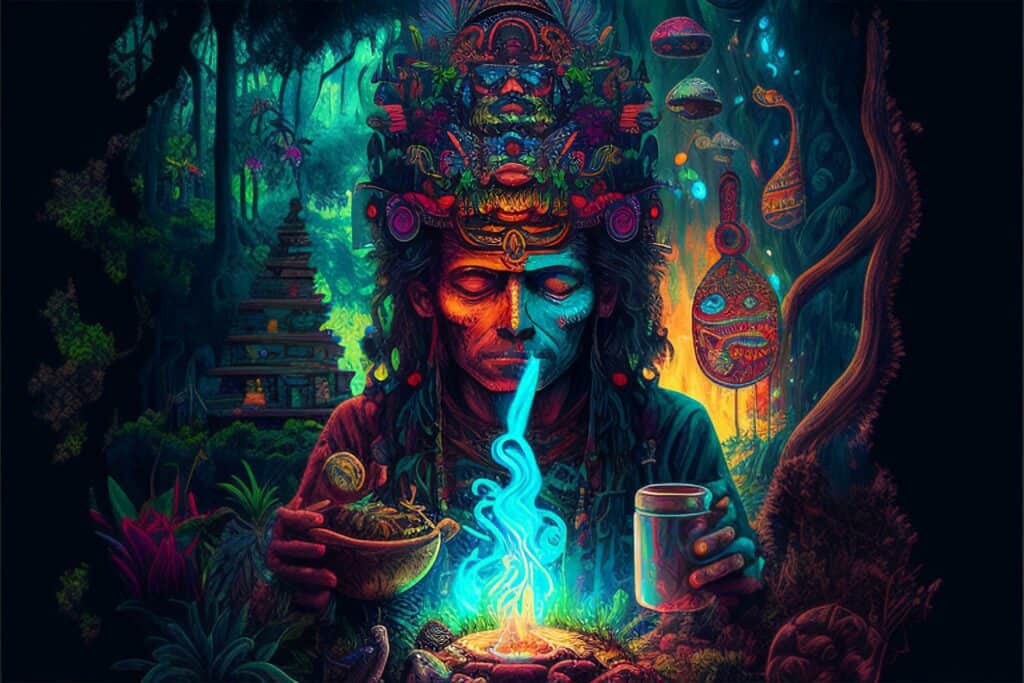
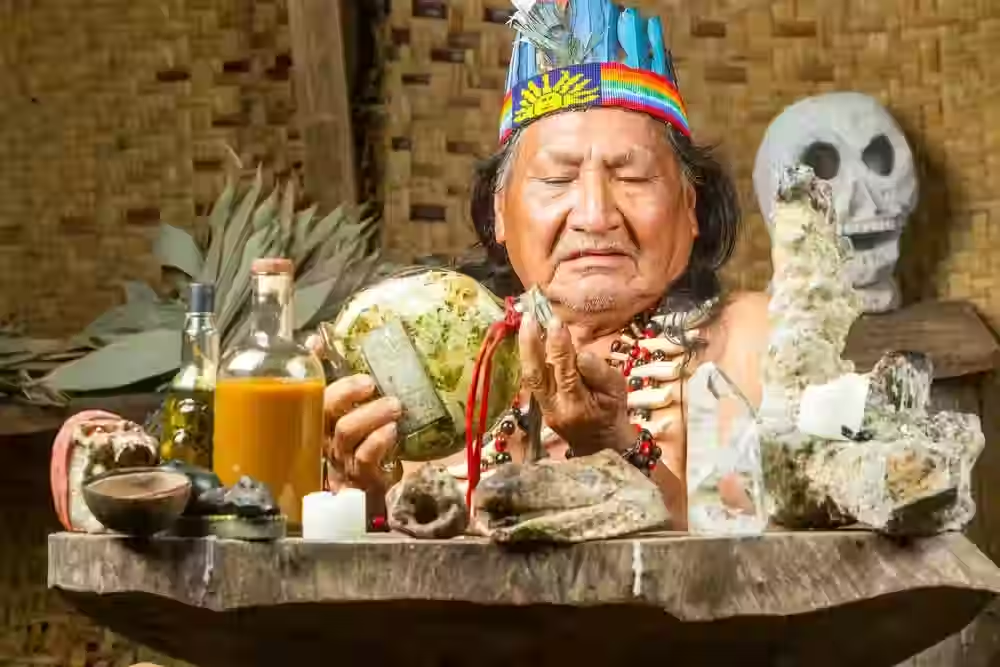
Ayahuasca ceremonies have drawn growing interest from people exploring spirituality, self-understanding and emotional healing. Ayahuasca is a psychoactive brew that Indigenous peoples of the Amazon have prepared for generations, and today it sits at the centre of a fast-growing — and largely unregulated — retreat industry. This guide explains what an ayahuasca ceremony actually involves, what people report from it, and the real risks and responsibilities to understand before considering one.
A note on safety: ayahuasca is powerful, not a casual wellness treatment. It can interact dangerously with some medications — particularly antidepressants such as SSRIs, SNRIs and MAOIs — and is not suitable for people with certain heart conditions or a personal or family history of psychosis, schizophrenia or bipolar disorder. Its legal status varies from country to country. Nothing here is medical advice; anyone considering ayahuasca should speak with a doctor first and check the law where they live.
What Is Ayahuasca?
Ayahuasca is a brew traditionally made from the Banisteriopsis caapi vine combined with the leaves of the Psychotria viridis shrub, which contains the psychedelic compound DMT. On its own DMT is broken down in the gut; the vine contains natural MAO inhibitors that allow it to become active, producing an experience that can last four to six hours. Amazonian traditions regard it as a sacred medicine — a “teacher plant” — taken in ceremony under the guidance of an experienced facilitator, often called a curandero or shaman.
It is worth remembering that ayahuasca comes from living Indigenous traditions. As its popularity has spread, so have concerns about commercialisation, pressure on wild plant populations, and ceremonies run by under-qualified facilitators. Approaching it with respect for its origins is part of engaging with it responsibly.
How Does an Ayahuasca Ceremony Work?
Ceremonies are usually held at night in a quiet, dedicated space and led by a facilitator trained within a particular tradition. Participants typically follow a preparatory diet — the dieta — for days or weeks beforehand, avoiding alcohol, certain foods and medications, and importantly any antidepressants. During the ceremony the facilitator serves the brew, holds the space with traditional songs (icaros) and supports participants through what can be an intense inner experience. Effects vary widely from person to person and from one sitting to the next.
Reported Benefits — and What the Evidence Shows
People who take part often describe emotional release, a fresh perspective on their lives, relief from anxiety or low mood, and experiences they find deeply meaningful or spiritual. Early scientific research into ayahuasca’s potential role in depression, PTSD and addiction is genuinely interesting but still preliminary — small studies, usually in controlled settings, rather than proof that it is a safe or effective treatment. It is not a substitute for evidence-based medical or mental-health care.
Risks and Who Should Not Take Ayahuasca
Alongside the experiences people value, ayahuasca carries genuine risks that deserve honest attention:
- Dangerous drug interactions. Combining ayahuasca with antidepressants (SSRIs, SNRIs, MAOIs), some other medications, or certain recreational drugs can cause serotonin syndrome, which can be life-threatening.
- Physical strain. Vomiting and diarrhoea (the “purge”) are common, and the brew raises heart rate and blood pressure — a real concern for anyone with a heart condition.
- Mental-health risks. It can trigger lasting psychological difficulty and is considered unsafe for people with a personal or family history of psychosis, schizophrenia or bipolar disorder.
- Difficult experiences. Intense fear, anxiety, confusion or distressing visions can occur, particularly without skilled support.
- Unregulated settings. The retreat industry is largely unregulated, and there have been reports of injuries, assaults and deaths at poorly run retreats. Vetting the facilitator and setting carefully is essential.
Choosing a Ceremony Responsibly
If you do decide to explore ayahuasca, the setting and the people running it matter more than anything else. Look for experienced, well-reviewed facilitators who screen participants for medical and psychological suitability, ask about your medications and history, and have clear safety support in place. Be cautious of anywhere that accepts anyone regardless of health, rushes the preparation, or treats it casually. A grounding practice such as meditation before and after can help you prepare and integrate the experience. If you are comparing options, our guides to ayahuasca retreats and the centres in Peru are a place to start looking at well-reviewed settings.
Frequently Asked Questions
What happens during an ayahuasca ceremony?
After a period of dietary preparation, a facilitator serves the brew in a quiet ceremonial space, usually at night. Over four to six hours participants may experience vivid visions, emotional release and physical purging, supported by the facilitator’s songs and presence.
How does ayahuasca affect you?
Effects vary enormously. Many describe shifts in perspective, emotional insight or a sense of connection; others have frightening or physically uncomfortable experiences. What follows tends to depend heavily on how a person integrates the experience afterwards.
What is the purpose of ayahuasca?
In its traditional context it is used for healing, spiritual connection and guidance within Indigenous Amazonian cultures. Today people also seek it for emotional healing and self-exploration — though it remains a serious undertaking, not a quick fix.
Is ayahuasca safe?
Not universally. For healthy, well-screened people in a skilled setting the risks are lower, but ayahuasca can be genuinely dangerous for those on certain medications or with particular medical or mental-health conditions. Honest self-assessment, medical advice and a trustworthy setting are what make the difference.
Conclusion
An ayahuasca ceremony is a powerful experience rooted in living Indigenous tradition — one that some find profoundly meaningful and others find overwhelming. Taking it seriously means being honest about the risks, respecting where it comes from, checking the law where you are, and, above all, choosing a safe and reputable setting. If you feel drawn to explore it, do so informed and unhurried.
Explore Related Retreats & Guides
Where you sit, and with whom, is the most important decision. Explore well-reviewed ayahuasca retreats and guides to the best centres in Peru.